TOPIC: IPHONE
Finding and Using Better iPhone Ringtones and Alarms
 30th August 2026
This summer has been me spend a lot of my weekends among Yorkshire's moors and dales. Rather than take my usual iPhone with me, I brought a Samsung Galaxy A53 that was my mainstay before I switched to Apple. Naturally, call forwarding was set up to facilitate this. Along the way, I was reminded just how much better ringtones and alarm music was on the older phone. Thus, I decide to see if I could choose something that was more to my liking.
Somewhat ironically, that led me to Pixabay. After all, its mainstay is a healthy collection of royalty-free imagery and video. However, it also has a selection of royalty-free music and sound effect clips which gave me something to explore and download if I so chose. Upbeat yet mellow instrumentals were what I had in mind. To me, using a vocal track is a bit out, and maybe out of keeping with what I often listen to in any event.
As it happens, I found what I needed. The website was browsed on my phone and I downloaded the desired tracks to the device. My next move was to open the Files app and find the audio files. On selecting one of them, a menu appeared. From that, I chose Share and then sought out Use as Ringtone (you may need to tap the More button to see that). After all that, they are available for use when the appropriate setting is made.
For phone ringtones, this may mean going to Settings > Apps > Phone > Notifications > Sounds to use the newly available tune. However, the changing the Ringtone entry under Settings > Sounds & Haptics could allow you to accomplish the same end faster. Doing likewise for an alarm uses a different route: Clock > Alarm and editing the alarm itself to use the new sound via the Sound setting.
Since I did all this, the new alarm tune has woken me up to catch a morning flight, accomplishing what I needed it to do. This is an example of my choices working for me so far. With some more use, the new tunes hopefully will embed themselves into my memory like the ones on the Samsung device. At least, I have an option for changing them if I ever need to do that, an unlikely possibility to my mind.
US, not us?
5th December 2007
As of the time of writing, Amazon MP3 is only available to customers in the U.S. of A., so any enthusiasm for its provision of DRM-free digital music offerings has to be tempered by that limitation on its availability. Apple's iTunes store offers some, but locked down tracks are its mainstay. Amazon's restrictions aren't the first in the digital audio world, and they are unlikely to be the last, too. Pandora have done it in the world of internet radio, and I seem to remember that iTunes might have done it too in their time.
There may be other reasons, but licensing and royalties might need to be negotiated country by country, slowing the rolling out of new products across the world. The iPhone faced an equivalent situation, though that involved mobile telephony providers. Commercial considerations pervade too, and I suppose that a worldwide launch of the iPhone might have been too complex a feat for Apple to manage; they probably wanted to nurture a sense of anticipation among customers in any case.
It appears that things are still following the pattern that at least used to be endemic in the motion picture industry: the U.S. gets to see a film first, and then everywhere else thereafter. Being able to reuse the movie film reels used in American cinemas has been the studios' advantage from the staggered releases. Because cinema releases have been staggered, video and DVD releases were staggered too, so it's both intriguing and frustrating to see American companies using a similar launching strategy in wholly different market sectors. It's astonishing how old habits die hard...
Safari on Windows?
12th June 2007
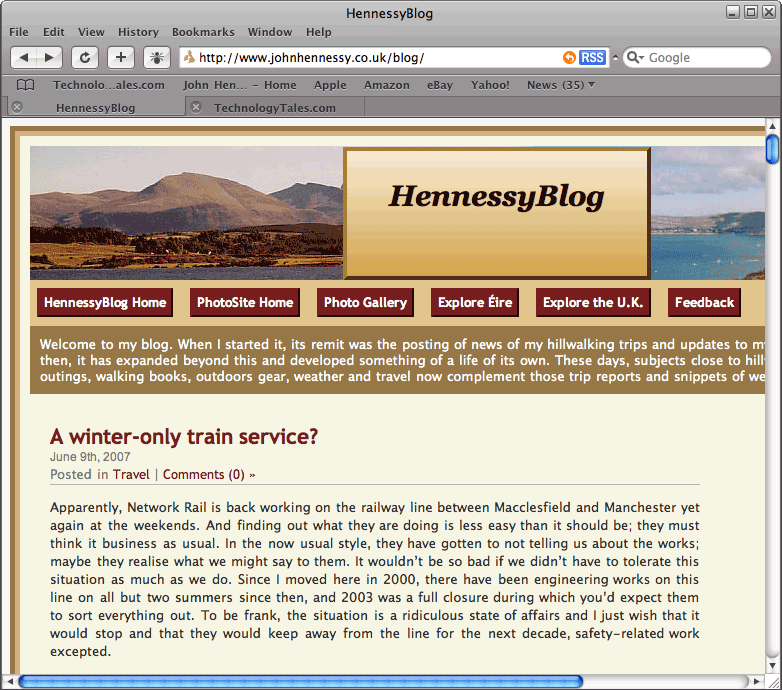 Steve Jobs recently surprised an audience at Apple's Worldwide Developer's Conference with the announcement that the Safari web browser is being made available for Windows. While everyone else is awaiting Apple's forthcoming iPhone, the Safari announcement is a more important one to me; not being big on phones, I will let the iPhone excitement pass me by. Without either buying a Mac or running OS X in a virtual machine, there was no other way for me to test my web pages in Safari bar looking for a rendering site on the web. Now, that has all changed, and I have downloaded the beta to have a look; it should iron out any rough edges that Mac users have been seeing.
Update: Safari seems to have got a mixed reaction from Windows users; some have tried it with Vista and cited issues. Another gripe has been its memory footprint, but I have seen Firefox take up 100 MB.