TOPIC: ARTIFICIAL INTELLIGENCE
Finding human balance in an age of AI code generation
 12th March 2025
Recently, I was asked about how I felt about AI. Given that the other person was not an enthusiast, I picked on something that happened to me, not so long ago. It involved both Perplexity and Google Gemini when I was trying to debug something: both produced too much code. The experience almost inspired a LinkedIn post, only for some of the thinking to go online here for now. A spot of brainstorming using an LLM sounds like a useful exercise.
Going back to the original question, it happened during a meeting about potential freelance work. Thus, I tapped into experiences with code generators over several decades. The first one involved a metadata-driven tool that I developed; users reported that there was too much imperfect code to debug with the added complexity that dealing with clinical study data brings. That challenge resurfaced with another bespoke tool that someone else developed, and I opted to make things simpler: produce some boilerplate code and let users take things from there. Later, someone else again decided to have another go, seemingly with more success.
It is even more challenging when you are insufficiently familiar with the code that is being produced. That happened to me with shell scripting code from Google Gemini that was peppered with some Awk code. There was no alternative but to learn a bit more about the language from Tutorials Point and seek out an online book elsewhere. That did get me up to speed, and I will return to these when I am in need again.
Then, there was the time when I was trying to get a Julia script to deal with Google Drive needing permissions to be set. This started Google Gemini into adding more and more error checking code with try catch blocks. Since I did not have the issue at that point, I opted to halt and wait for its recurrence. When it did, I opted for a simpler approach, especially with the gdrive CLI tool starting up a web server for completing the process of reactivation. While there are times when shell scripting is better than Julia for these things, I added extra robustness and user-friendliness anyway.
During that second task, I was using VS Code with the GitHub Copilot plugin. There is a need to be careful, yet that can save time when it adds suggestions for you to include or reject. The latter may apply when it adds conditional logic that needs more checking, while simple code outputting useful text to the console can be approved. While that certainly is how I approach things for now, it brings up an increasingly relevant question for me.
How do we deal with all this code production? In an environment with myriads of unit tests and a great deal of automation, there may be more capacity for handling the output than mere human inspection and review, which can overwhelm the limitations of a human context window. A quick search revealed that there are automated tools for just this purpose, possibly with their own learning curves; otherwise, manual working could be a better option in some cases.
After all, we need to do our own thinking too. That was brought home to me during the Julia script editing. To come up with a solution, I had to step away from LLM output and think creatively to come up with something simpler. There was a tension between the two needs during the exercise, which highlighted how important it is to learn not to be distracted by all the new technology. Being an introvert in the first place, I need that solo space, only to have to step away from technology to get that when it was a refuge in the first place.
For anyone with a programming hobby, they have to limit all this input to avoid being overwhelmed; learning a programming language could involve stripping out AI extensions from a code editor, for instance, LLM output has its place, yet it has to be at a human scale too. That perhaps is the genius of a chat interface, and we now have Agentic AI too. It is as if the technology curve never slackens, at least not until the current boom ends, possibly when things break because they go too far beyond us. All this acceleration is fine until we need to catch up with what is happening.
Little helpers
22nd September 2024
This could have been a piece that appeared on my outdoors blog until I got second thoughts. One reason why I might have done so is that I am making more use of Perplexity for searching the web and gaining more value from its output. However, that is proving more useful in writing what you find on here. Knowing the sources for a dynamically generated article adds more confidence when fact checking, and it is remarkable what comes up that you would find quickly with Google. There is added value with this one.
A better candidate would have been Anthropic's Claude. That has come in handy when writing trip reports. Being able to use a stub to prototype a blog entry really has its uses. The reality is that everything gets rewritten before anything gets published; these tools are never so good as to feature everything that you want to mention, even if they do a good job of mimicking your writing tone and style. Nevertheless, being able to work with the content beyond doing a brain dump from one's memory is an undeniable advance.
Sometimes, there are occasions when using Bing's access to OpenAI through Copilot helps with production of images. In reality, I do have an extensive personal library of images, so they possibly should suffice in many ways. However, curiosity about the technology overrides the effort that photo processing requires.
While there may be some level of controversy surrounding the use of AI tools in content creation, using such tooling for proofing content should not raise too much ire. Grammarly comes up a lot, though it is LanguageTool that I use to avoid excessive butting into my writing style. That has changed to comply with rules that had passed me without my noticing, but there are other things that need to be turned off. Configuring the proof tools in other ways might be better, so that is something to explore, or we could end up with too much standardisation of writing; there needs to be room for human creativity at all times.
All of these are just a sample of what is available. Just checking in with The Rundown AI will reveal that there is an onslaught of innovation right now. Hype also is a problem, yet we need to learn to use these tools. The changeover is equivalent to the explosive increase in availability of personal computing a generation ago. That brought its own share of challenges (some were on the curve while others were not) until everything settled down, and it will be the same with what is happening now.
Automating writing using R and Claude
16th April 2024
Automation of writing using AI has become prominent recently, especially since GPT came to everyone's notice. It is more than automation of proofreading but of producing the content itself, as Mark Hinkle and Luke Matthews can testify. Figuring out how to use Generative AI needs more than one line prompts, so knowing what multi-line ones will work is what is earning six digit annual salaries for some.
Recently, I gave this a go when writing a post that used content from a Reddit post thread. The first step was to extract the content from the thread, and I found that I could use R to do this. That meant installing the RedditExtractoR package using the following command:
install.packages("RedditExtractoR")
Then, I created a short script containing the following lines of code with placeholders added in place of the actual locations:
library("RedditExtractoR")
write.csv(get_thread_content("<URL for Reddit post thread>"), "<location of text file>")
The first line above calls the RedditExtractoR package for use so that its get_thread_content function could be used to scape the thread's textual content. This was then fed to write.csv for writing out a text file with content.
Once I had the text file, I could upload it to Anthropic's Claude for the next steps. Firstly, I got it to give me a summary of the thread discussion before I asked it to give me the suggested solutions to the issue. Impressively, it capably provided me with the latter.
Now armed with these answers, I set to crafting the post from them. Claude did not do all the work for me, but it certainly helped with the writing. This is something that I fancy exploring further, especially given how business computing is likely to proceed in the next few years.
A little bit of abstraction: The quiet utility of generated imagery
21st August 2021

Data science has remained in my awareness since 2017 though my work is more on its fringes in clinical research. In fact, I have been involved more in the standardisation and automation of more traditional data reporting than in the needs of data modelling such as data engineering or other similar disciplines. Much of this effort has meant the use of SAS, with which I have programmed since 2000 and for which I have a licence (an expensive commodity, it has to be said), but other technologies are being explored with R, Python and Julia being among them.
Though the change in technological scope does bring an element of excitement and new interest, there is also some sadness when tried and trusted technologies meet with newer competition and valued skills are no longer as career securing as they once were. Still, there is plenty of online training out there, and I already have collected some of my thoughts on this. The learning continues and the need for repositioning is also clear.

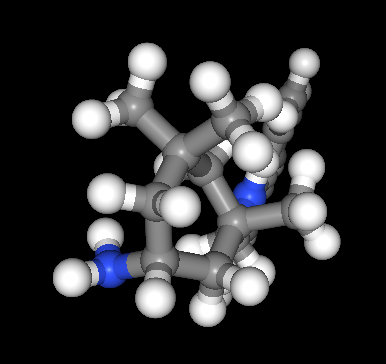
The journey also brought some curios to my notice. One of these is This Person Does Not Exist, a website building photos of non-existent faces using machine learning. Recently, I learned of others like it such as This Artwork Does Not Exist, This Cat Does Not Exist, This Horse Does Not Exist, and This Chemical Does Not Exist. The last of these probably should be entitled "This Molecule Does Not Exist (Yet)" since it is a fictitious molecular structure that has been created and what you get is an actual moving image that spins it around in three-dimensional space. The one with dynamically generated abstract art is the main inspiration for this piece and is of more interest to me, while the other two are more explanatory, though the horse website is not so successful in its execution and one can ask why we need more cat pictures.
To some, the idea of creating fake pictures may feel a little foreboding, and that especially applies to photos of people and the livelihoods of any content creators. Nevertheless, these sources of imagery have their legitimate uses, such as decorating websites or brochures, which is where my interest is piqued. After all, there are some subjects where pictures can be scarce, so any form of decoration that enlivens an article has to have some use. While technology websites like this one can feature images too with screenshots and device photos being commonplace, they can all look like each other, hence the need for a little more variety and having pictures often increases the choice of website themes as well since so many need images to make them work or stand out. As ever, being sparing with any innovations remains in order, which is how I approach this matter as well.
Exploring online training options for computing and data science skills
18th April 2021
Recently, I shared my thoughts on learning new computing languages by oneself using books, online research and personal practice. As successful as that can be, there remains a place for getting some actual instruction as well. Maybe that is why so many turn to YouTube, where there is a multitude of video channels offering such possibilities without cost. What I have also discovered is that this is complemented by a host of other providers whose services attract a fee, and there will be a few of those mentioned later in this post. Paying for online courses does mean that you can get the benefit of curation and an added assurance of quality in what appears to be a growing market.
The variation in quality can dog the YouTube approach, and it also can be tricky to find something good, even if the platform does suggest new videos based on what you have been watching. Much of what is found there does take the form of webinars from the likes of the Why R? Foundation, Posit or the NHSR Community. These can be useful, and there are shorter videos from such providers as the Association of Computing Machinery or SAS Users. These do help more if you already have some knowledge about the topic area being discussed, so they may not make the best starting points for someone who is starting from scratch.
Of course, working your way through a good book will help, and it is something that I have been known to do, but supplementing this with one or more video courses really adds to the experience and I have done a few of these on LinkedIn. That part of the professional platform came from the acquisition of Lynda.com and the topic areas range from soft skills like time management through to computing skills courses with R, SAS and Python seeing coverage among the data science portfolio. Even O'Reilly has ventured into the area in an expansion from the book publishing activities for which so many of us know the organisation.
The available online instructor community does not stop at the above since there are others like Degreed, Baeldung, Udacity, Programiz, Udemy, Business Science and Datanovia. Some of these tend towards online education provision that feels more like an online university course, and those are numerous as well as you will find through KDNuggets. Both of these earn income from advertising to pay for featured blog posts and newsletters, while the former also organises regular webinars and was my first port of call when I became curious about the world of data science during the autumn of 2017.
My point of approach into the world of online training has been as a freelance information professional needing to keep up to date with a rapidly changing field. The mix of content that is both free of charge and that which attracts a fee is one that can work. Both kinds do complement each other while possessing their unique advantages and disadvantages. The need to continually expand skills and knowledge never goes away, so it is well worth spending some time working what you are after, since you need to be sure that any training always adds to your own knowledge and skill level.