How the Cinnamon desktop environment offers a conventional alternative to the experimental approaches of others
 28th January 2012
The computer on which I am writing these words is running Linux Mint with the Cinnamon desktop environment, a fork of GNOME Shell. This looks as if it will be the default face of GNOME 3 in the next version of Linux Mint, with the MGSE dressing up of GNOME Shell looking more and more like an interim measure until something more consistent was available. While some complained that what was delivered in version 12 of the distribution was a sort of greatest hits selection, I reckon that bets were being hedged by the project team.
Impressions of what's coming
By default, you get a single panel at the bottom of your screen with everything you need in there. However, it is possible to change the layout so that the panel is at the top or there are two panels, one at the top and the other at the bottom. So far, there is no means of configuring which panel applet goes where, as was the case in Linux Mint 11 and its predecessors. However, the default placements are very sensible, so I have no cause for complaint at this point.
Just because you cannot place applets doesn't mean that there is no configurability, though. Since Cinnamon is extensible, you can change the way that time is displayed in the clock, as well as enabling additional applets. It is also possible to control visual effects, such as the way new application windows pop up on a screen.
GNOME 3 is there underneath all of this, though there's no sign of the application dashboard of GNOME Shell. The continually expanding number of slots in the workspace launcher is one sign, as is the enabling of a hotspot at the top right hand corner by default. This brings up an overview screen showing what application windows are open in a workspace. The new Mint menu even gets the ability to search through installed applications, together with the ability to browse through what's available.
In summary, Cinnamon already looks good, though a little polish and extra configuration options wouldn't go amiss. An example of the former is the placement of desktop numbers in the workspace switcher, and I already have discussed the latter. It does appear that the Linux Mint approach to desktop environments is taking shape with a far more conventional feel than the likes of Unity or GNOME Shell. Just as Cinnamon has become available in openSUSE, I can see it gracing LMDE too whenever Debian gets to moving over to GNOME 3 as must be inevitable now unless they take another approach such as MATE.
In comparison with a revolution
While Linux Mint are choosing convention and streamlining GNOME to their own designs, it appears that Ubuntu's Unity is getting ever more experimental as the time when Ubuntu simply evolved from one release to the next becomes an increasingly more distant memory. The latest development is the announcement that application menus could get replaced by a heads-up display (HUD) instead. That would be yet another change made by what increasingly looks like a top-down leadership, reminiscent of what exists at Apple. While it is good to have innovation, you have to ask where users fit in all of this when Linux Mint already has gained from what has been done so far and may gain more again. Still, seeing what happens to Ubuntu sounds like an interesting pastime, though I'm not sure that I'd be depending on the default spin of this distro as my sole operating system right now. Also, changing the interface every few months wouldn't work in a corporate environment at all, so you have to wonder where Mark Shuttleworth is driving all this, though Microsoft is engaging in a bit of experimentation of its own. We are living in interesting times for the computer desktop, so it's just as well that there are safe havens like Linux Mint, too. Watching from afar sounds safer.
Dispensing with temptation as new cameras keep getting launched
26th January 2012
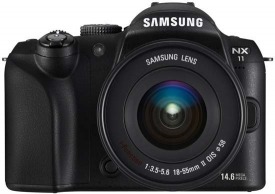
Many manufacturers followed Olympus into the compact system camera market. Nikon joined late last year, though Canon hasn't yet entered. Olympus E-PL1 kits with 14-42mm zoom lenses tempted me at around £250. After researching competitors, my shortlist included the Samsung NX-11, Sony NEX-C3, and its higher-end model, the NEX-5N.
What eventually countered the allure of shiny objects was the question as to why I needed such an item. After all, I already possess a Pentax K10D DSLR and a Canon PowerShot G11, and these have been satisfying my photographic needs for a while now. While the DSLR may date from 2007, it is still working well for me and, if it ever needed replacing, I'd be going for another Pentax with the K-5 being a strong contender. The Canon is doing what's asked of it, so the recent launching of the G1 X isn't so tempting either.
The whole dalliance has me wondering about how photographic equipment changeovers come about. After all, it was around a decade ago with the DSLR revolution was in the offing if not in progress. Until then, film photography was predominant, but it looks as if it got as far as it could from a technological point of view when I look back at what happened. The digital photography area was new and untapped, so moving there offered new possibilities and purchases more easily justified. The result is that very few film cameras are being made nowadays. Ironically, it's film photography that now is untrammelled terrain for many, and it is holding its own too in an era when digital photography predominates.
The same sort of newness that came with digital photography also applies to CSC's to a certain extent. From the heritage of half-frame 35 mm film photography, Olympus has fashioned a different type of digital camera: essentially a compact with interchangeable lenses. Was it the fact that I have no CSC that caused me to be tempted, and has it happened to others too? Also, is that what got digital photography going in the first place?
It almost feels as if camera manufacturers have to keep bringing to market new models and new types of camera to stay in business. After all, Minolta had to sell its camera division to Sony when they failed to get going in the DSLR market quickly enough. The same thing might have happened to Pentax too, with the marque passing to first to Hoya, and then to Ricoh after the firm lost its independence.
What doesn't help is the lack of longevity of camera models. The coming of digital photography has exacerbated this situation, with models being launched at a frenetic rate. In the days of film photography, a model could last on the market for a few years and there was once a time when a twenty-year lifetime wouldn't have looked so ridiculous, though there were incremental improvements made over that time too. For instance, a Pentax K1000 wouldn't be the same at the end of its production run as it was at the start, though the model number may be the same. That world is gone.
SLR design has endured for about 50 years, but mirrorless technology now presents unprecedented competition. Even compact cameras offer live through-the-lens viewing. Olympus revived its film heritage by creating the E-P1 with interchangeable lenses. These descendants of the original half-frame 35mm PEN cameras appropriately use smaller micro four thirds sensors. Sony has developed translucent mirror technology that eliminates moving parts found in traditional SLRs. Canon experimented with this in the 1980's with film cameras but abandoned it. Meanwhile, Samsung and Panasonic produce mirrorless SLR-style cameras with live viewing and electronic viewfinders, suggesting full-size equivalents may be coming. Olympus's current teaser campaign has sparked speculation about a possible OM-D release.
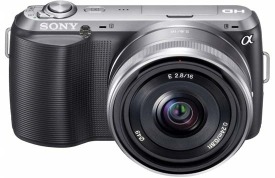
In parallel with all this, Sony is making a good impression with their CSC's, the NEX series. These have APS-C sized sensors like many DSLR's and in compact bodies as well. However, the feel very much is that of a compact camera and some have complained of a like of buttons on them, even if the photographic quality is excellent. Samsung have gone for the same sensor size in their NX-11, while they have gone for SLR styling. That may be more suitable for some than having to find settings buried in menus.
We're living in an exciting yet unsettling period of camera technology evolution. Cameras are becoming smaller, and traditional still cameras now shoot videos too, though filmmaking remains a time-intensive hobby that doesn't interest me. Recent legal developments complicate original work, as shown by a successful copyright case based on Photoshop image processing. With countless images being created daily and potential changes allowing intellectual property claims in small claims courts, avoiding infringement becomes harder. Film photography seems appealing in contrast and remains viable despite Kodak's financial struggles. As tastes shift and film becomes novel again, the future is uncertain. Perhaps investing in a DSLR body makes sense before Compact System Cameras completely replace them. Camera technology has become interesting once more.
Testing of Ubuntu 12.04 Alpha 1 reveals a polished Unity desktop with room for improvement
22nd January 2012
After an aborted installation in VirtualBox using the direct installation, I got a VM instance of Ubuntu 12.04 in place by installing from a loaded Live CD session. That proceeded without any trouble and downloaded the required updates too. First impressions revealed a polished Unity interface that ran without any crashes. The task of adding VirtualBox's Guest Additions in the usual way was all that was needed to tart up the experience even more. However, there remains a wish list for improvements to the Unity desktop, so here are mine:
- Merging of an application title bar with the desktop's top panel on maximisation: In 11.10, removing the
appmenupackages does force menus into application windows and that seems to be destined as a configurable item in Unity at some point; it'd be good to see it in 12.04 though it's not in the first alpha release. The merging of the panel and title bar would be a good thing to have as a user setting too because I am unconvinced by the current behaviour when there is plenty of screen space. - Rearranging icons on the application launcher: There appears to be no obvious way to do this at the moment and attempting to move them with a mouse only moves the launcher up and down. There is no doubt that this behaviour is a bonus for those working with small screens, but it is a nuisance unless there is another means for achieving the same end.
- Desktop environment switcher on the login screen: This seems to have disappeared for now. Hopefully, this is an oversight that will see correction in later stages of the development of Ubuntu 12.04. This is how I currently get Ubuntu 11.10 to boot into GNOME Shell, so its loss would be a step backwards. Then, a Gubuntu project would become truly necessary, though I have to say that Linux Mint makes such a viable alternative that I wonder how they would get going.
In summary, it does look as if the Unity interface is getting more and more polished. However, there are niggles that I have described above that, I think, need addressing, and I hope that many of them will be addressed in either 12.04 or 12.10. Though usability seems to be improving, I still am left with the impression that it has a way to go yet.
Dealing with variable length warnings in SAS 9.2
11th January 2012
A habit of mine is to put a LENGTH or ATTRIB statement between DATA and SET statements in a SAS data step to reset variable lengths. By default, it appears that this triggers truncation warnings in SAS 9.2 or SAS 9.3 when it didn't in previous versions. SAS 9.1.3, for instance, allowed you to have something like the following for shortening a variable length without issuing any messages at all:
data b;
    length x $100;
    set a;
run;
In this case, x could have a length of 200 previously and SAS 9.1.3 wouldn't have complained. Now, SAS 9.2 and 9.3 will issue a warning if the new length is less than the old length. This can be useful to know, but it can be changed using the VARLENCHK system option. Though the default value is WARN, it can be set to ERROR if you really want to ensure that there is no chance of truncation. Then, you get error messages and the program fails where it normally would run with warnings. Setting the value of the option to NOWARN restores the type of behaviour seen in SAS 9.1.3 and versions before that.
The SAS documentation says that the ability to change VARLENCHK can be restricted by an administrator, so you might need to deal with this situation in a more locked down environment. Then, one option would be to do something like the following:
data b;
    drop x;
    rename _x=x;
    set a;
    length _x $100;
    _x=strip(x);
run;
While It's a bit more laborious than setting the VARLENCHK option to NOWARN, the idea is that you create a new variable of the right length and replace the old one with it. That gets rid of warnings or errors in the log and resets the variable length as needed. Of course, you have to ensure that there is no value truncation with either remedy. If any is found, then the dataset specification probably needs updating to accommodate the length of the values in the data. After all, there is no substitute for getting to know your data and doing your own checking should you decide to take matters into your hands.
There is a use for the default behaviour, though. If you use a specification to specify a shell for a dataset, then you will be warned when the shell shortens variable lengths. That allows you to either adjust the dataset or your program. Also, it provides additional information when you get variable length mismatch warnings when concatenating or merging datasets. There was a time when SAS wasn't so communicative in these situations and some investigation was needed to establish which variable was affected. Now, that has changed without leaving the option to work differently if you so do desire. Sometimes, what can seem like an added restriction can have its uses.
Trying out Irish Mobile Broadband
2nd January 2012
Over the course of a year, I end up visiting Ireland a few times, so I decided to invest in a Meteor PAYG broadband stick to see how I'd get on with it. For €20, you can get a 30-day pass with 7.5 GB downloading capacity, a more generous offer than you'd get with some UK mobile networks (T-Mobile really comes to mind here). Signal strength was strong wherever I tried it too with 3G being available so long as you are in the right place with EDGE being the lowest that I got otherwise. Download speeds are good too so it turned out to be a good investment of €30 to get the Huawei E173 USB dongle (I had a T-Mobile one of these before that no longer works, so I am keeping an eye on reliability with this one; though the design seems a little different, I am getting OK so far) and €20 of credit that comes with it. After all, anything's better than the punitive roaming rates that UK providers charge.